Training · 18 September 2026 · 4 min read
Why Separation Anxiety Training Stalls, and How to Get Moving Again
Stuck at the same number for weeks, with regressions back to almost nothing? Plateaus are a normal stage of separation anxiety training. Here is what causes them and what actually clears them.
By Elio
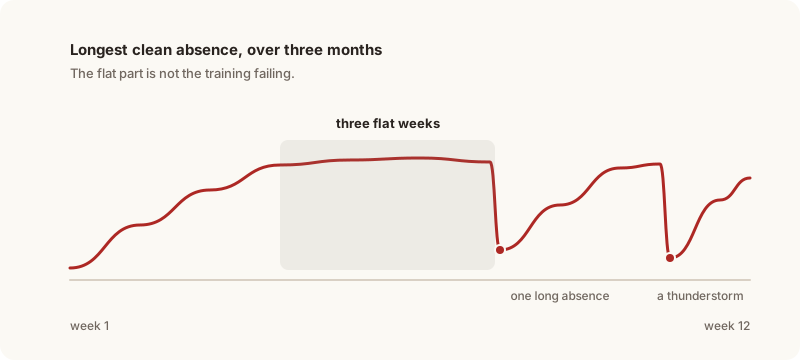
There is a very specific kind of discouraged that comes from month three. The early wins are long gone, the number has not moved in weeks, and the sessions that used to feel like progress now feel like an expensive way to confirm nothing is happening.
Owners describe it in almost identical terms. Stuck at eighteen minutes, with regressions back to five. Twenty minutes after a year of strict training. It is common enough that hitting it says nothing about your dog or your consistency.
Why does separation anxiety training plateau?
Because too many recent sessions have landed slightly over threshold, and your dog has stopped accumulating clean absences.
Training works by stacking absences your dog got through comfortably. Each one is evidence that being alone was survivable. A session that tips over threshold does not just fail to add evidence — it adds the opposite, and it takes several clean sessions to work back to level.
If you are not certain which of your sessions went over, the escalation test is the place to start. A plateau is usually what that looks like from outside: enough over-threshold sessions mixed in that the wins and losses roughly cancel. The number stops moving not because your dog has hit a ceiling but because the ledger is balancing at zero.
How Duckie helps: every absence is recorded as passed or not, so a run of near-misses is visible as a pattern rather than felt as a vague sense that things have stopped working.
Is a plateau the same as a regression?
No. A plateau is progress flattening. A regression is the number dropping sharply, often back to a fraction of your best.
Regressions usually have a cause you can name: an unavoidable long absence, a house move, a thunderstorm, illness, a change in household routine. A dog who was managing forty minutes going back to five after one four-hour absence is a regression, and it is a normal and recoverable event rather than a collapse of everything you built.
Plateaus tend to have no single cause. They come from accumulated small overshoots rather than one big one, which is why there is no incident to point at.
How Duckie helps: because sessions are timestamped, a drop can be lined up against the day it started, which usually makes the cause obvious.
How do you break through a separation anxiety plateau?
Drop back well below your stuck number and run several sessions your dog passes easily, before trying to climb again.
This feels like losing ground and is the thing that reliably works. If you are stuck at eighteen minutes, run a week at eight to twelve. The goal is a clean run of absences your dog gets through without effort, rebuilding the stack of successful reps. Then reintroduce longer steps occasionally rather than every day.
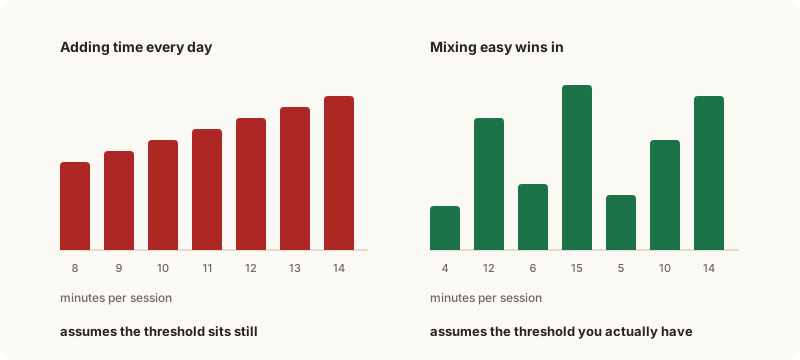
Mix the lengths. A session of four minutes, then twelve, then six, then fifteen teaches your dog that departures are variable and usually easy. A session that is always slightly longer than yesterday teaches them that departures keep getting harder, which is the opposite lesson.
How Duckie helps: the recommended next step comes from what the camera actually saw, so an easy-week drop-back is based on recent sessions rather than on the number you wish you were at.
Should you keep increasing the duration every session?
No. The ten percent per day rule is a starting heuristic, not a schedule to hold yourself to.
It works early because thresholds at the low end are fairly stable. It breaks down later, because the same dog can manage forty-five minutes one day and twenty-five the next, and time of day can shift the number by an hour or more. A fixed increase applied to a moving target guarantees that some proportion of your sessions land over the line.
Trainers who work with this daily are explicit that increases are not a fixed amount. Past the one to two hour mark, progress tends to come in larger, less frequent chunks rather than steady daily additions.
How Duckie helps: time to first sign is tracked per session and per time of day, so the pattern behind a bad week is visible instead of being read as failure.
How long do plateaus usually last?
Commonly two to four weeks, and longer plateaus are not unusual at higher durations.
The more useful question is whether anything is moving underneath the headline number. Time to settle after the door closes, the number of door visits, and how quickly your dog recovers from a disturbance all tend to improve before maximum duration does. A dog whose longest absence is unchanged but who now settles in two minutes instead of nine is improving.
That is the strongest argument for tracking more than one number. Maximum duration is the slowest-moving metric you own, and judging a plateau by it alone will have you concluding nothing is working during the weeks when most of the work is happening.
Final thoughts
Plateaus are a stage, not a verdict. The response that clears them is the one that feels like giving up ground: go shorter, go easier, vary the lengths, and let the clean sessions accumulate again.
Duckie records time to first sign and time to settle on every absence, so you can see the movement that the headline number hides.
Common questions
- How long do separation anxiety plateaus last?
- Two to four weeks is typical, and longer stretches are common once absences pass an hour. A plateau that persists for months with no movement in settling time either is worth reviewing with a certified trainer.
- Should I push through a plateau or drop back?
- Drop back. Pushing through means running more sessions at a duration your dog is already failing, which adds over-threshold absences to the pile. A week of easy sessions rebuilds the base that progress is built on.
- My dog regressed after one long absence. Is the training ruined?
- No. Regression after an unavoidable long absence is expected and recovers. Restart at a length your dog will pass comfortably and rebuild — most owners report returning to their previous duration within one to three weeks.
- Is it normal to be stuck at twenty minutes for months?
- It happens, and owners report exactly this. Twenty to thirty minutes is a common sticking point. Check whether settling time and door visits are still improving, because those usually move while the headline duration does not.
- Does medication help with plateaus?
- For some dogs, medication prescribed by a vet or veterinary behaviourist alongside training makes progress possible where training alone has stalled. That is a conversation for your vet, not something to decide from an article.